



In modern AV systems, achieving synchronized high-quality video and immersive audio often requires precise signal management. An HDMI audio splitter serves as a critical component that processes HDMI signals to separate or distribute audio while maintaining video integrity. These devices have become essential for home theaters, gaming setups, and professional installations where standard HDMI passthrough falls short. This guide provides engineers, enthusiasts, and installers with detailed insights drawn from practical experience in signal processing and system integration.
What Is an HDMI Audio Splitter and How Does It Work?
HDMI audio splitters are specialized AV devices designed to take a single HDMI input containing embedded audio and video, then route the audio through dedicated outputs while passing the video signal forward, often with additional splitting capabilities. They solve common integration challenges by giving users independent control over audio destinations without compromising the primary video feed.

HDMI Audio Splitter vs. Standard HDMI Splitter
A standard HDMI splitter simply duplicates the complete HDMI signal - both video and audio - to multiple outputs for identical displays. This approach works for video walls or mirrored screens but provides no independent audio routing options.
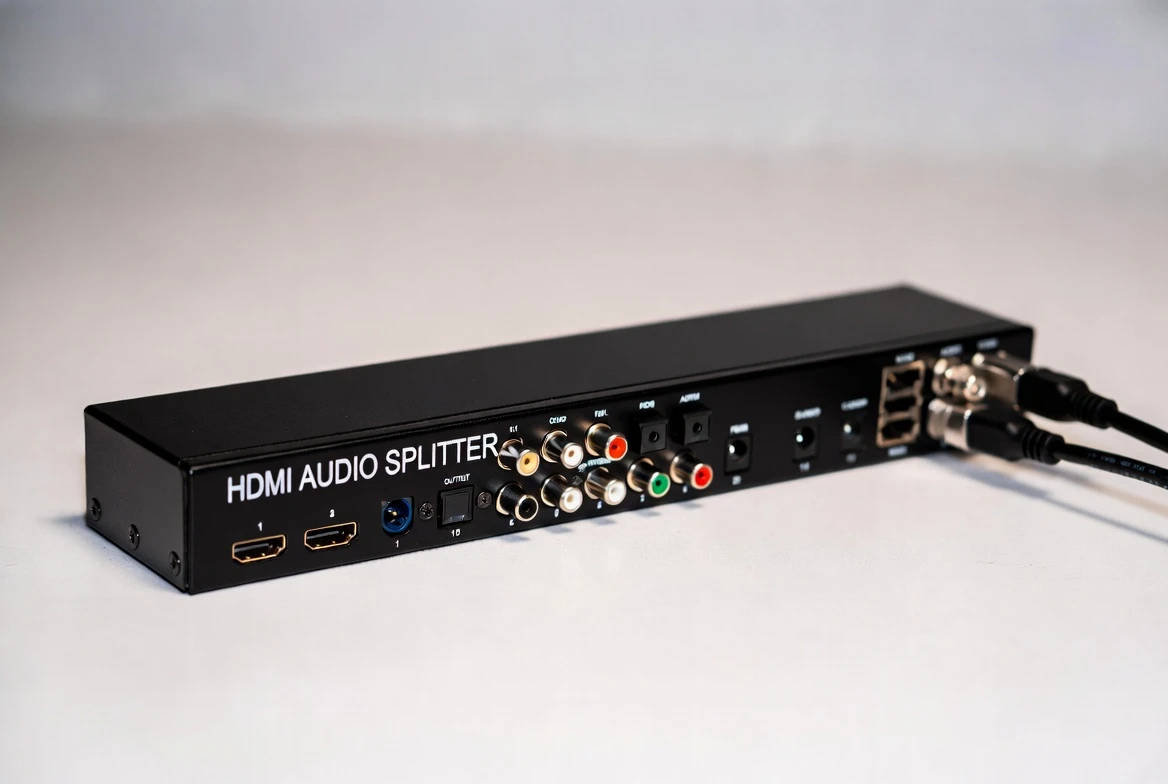
An HDMI audio splitter, however, incorporates audio extraction circuitry that decodes the embedded audio stream. It allows users to send audio to external systems such as AV receivers, soundbars, or amplifiers via optical, coaxial, or analog connections while forwarding clean video to one or more displays. This separation is particularly valuable in setups where the display's built-in speakers cannot deliver the desired audio quality. From an engineering perspective, the key advantage lies in reduced signal chain complexity and the ability to support higher-fidelity audio formats that some displays might otherwise downmix or strip.
HDMI Audio Extractor vs. HDMI Audio Splitter
Many users confuse HDMI audio extractors with splitters, yet their primary functions differ. An HDMI audio extractor focuses on pulling audio from the HDMI stream and providing separate audio outputs, typically with a single passthrough HDMI port for video. It excels in simple source-to-receiver scenarios.
A true HDMI audio splitter often combines extraction with duplication, offering multiple HDMI outputs alongside dedicated audio ports. This hybrid design proves more versatile for users who need to feed multiple displays while simultaneously routing audio to a central system. In practice, combo units reduce component count, minimize potential latency points, and simplify installation in both residential and commercial environments.
Key Technical Specifications Explained (HDMI 2.0/2.1, 4K/8K, Audio Formats)
When evaluating an HDMI audio splitter, several technical specifications determine real-world performance. HDMI 2.0 devices support up to 18 Gbps bandwidth, adequate for 4K60 with HDR and multi-channel audio. HDMI 2.1 units push capabilities to 48 Gbps, enabling 8K resolution, higher frame rates, Variable Refresh Rate (VRR), and enhanced eARC functionality.
Audio capabilities deserve equal attention. Quality splitters handle lossless codecs such as Dolby TrueHD, DTS-HD Master Audio, and immersive Dolby Atmos/DTS:X. They maintain sample rates up to 192 kHz and bit depths of 24 bits. Additional important features include HDCP 2.3 compliance for protected content and robust EDID management to ensure reliable handshakes between sources and sinks. Professional units also incorporate signal regeneration and clock synchronization circuits that minimize jitter and preserve timing accuracy across long cable runs.
Benefits of Using a High-Quality HDMI Audio Splitter
High-quality HDMI audio splitters deliver more than basic signal division. They provide clean audio separation, maintain video fidelity, and offer system flexibility that justifies their place in both enthusiast and professional AV designs.

Lossless Audio Transmission and Multi-Channel Support
Premium HDMI audio splitters ensure bit-perfect transmission of audio signals, preserving every detail of the original source material. This capability becomes crucial when working with advanced surround formats that demand full bandwidth and precise channel mapping.
Unlike lower-cost alternatives that may compress or downmix audio to fit bandwidth constraints, well-engineered units pass full Dolby Atmos object metadata and high-resolution PCM streams without alteration. Engineers value this because it maintains the intended dynamic range and spatial imaging that directors and sound designers intended. In listening tests, the difference appears as tighter bass, clearer dialogue, and more convincing height effects in overhead speaker configurations.
Maintaining Video Quality While Extracting Audio
A primary concern with any inline device is potential degradation of the video signal. Quality HDMI audio splitters address this through independent processing paths and high-performance buffering. The video output typically experiences negligible added latency and retains full resolution, color depth, and HDR metadata.
Independent measurements show that top-tier units add less than 1ms of delay on the video path and introduce no measurable impact on contrast or color accuracy when paired with certified HDMI cables. This performance level allows users to enjoy 4K HDR or 8K content without compromise while enjoying superior audio from dedicated equipment. Thermal management and quality PCB design further ensure stable long-term performance without signal drift.
Flexibility, Convenience, and Cost Savings
One of the strongest advantages of an HDMI audio splitter lies in its ability to bridge generational gaps in AV technology. Rather than replacing functional but older receivers or amplifiers, users can integrate them seamlessly into modern 4K or 8K workflows.
This approach delivers significant cost savings while expanding system capabilities. For instance, a single splitter can accept input from a gaming console or streaming device, output pristine video to a television, and route lossless audio to a classic surround receiver. The result is greater convenience through reduced remote juggling and cleaner cable management. In commercial settings, this flexibility simplifies large-scale deployments where different zones require tailored audio experiences.
Why Professional Manufacturing Matters for Reliability
The long-term performance of an HDMI audio splitter depends heavily on manufacturing quality. Professional-grade units undergo extensive signal integrity testing, thermal cycling, and compatibility validation across hundreds of source and display combinations.
This attention to detail translates into lower failure rates, better electromagnetic compatibility, and consistent operation even in challenging environments with temperature fluctuations or electrical noise. Users in 24/7 installations particularly benefit from these engineering practices, as they reduce maintenance needs and extend the overall lifespan of the AV system.
How to Choose the Right HDMI Audio Splitter
Selecting the appropriate HDMI audio splitter requires careful evaluation of your current setup and future expansion plans. Prioritizing the right specifications prevents compatibility headaches and ensures optimal performance.
Key Factors to Consider: Resolution, Ports, and Compatibility
Begin by identifying the maximum resolution and refresh rate your sources and displays demand. For current 4K HDR workflows, select devices rated for HDMI 2.0 or better with full 18 Gbps support. Future-proofing for 8K requires HDMI 2.1 certification and adequate bandwidth headroom.
Port configuration matters equally. Count your required HDMI outputs and verify the availability of desired audio connections. Compatibility testing should include popular sources such as PlayStation 5, Xbox Series X, Apple TV, and various streaming boxes. Devices with automatic EDID management and multiple preset modes handle diverse equipment ecosystems more gracefully.
Audio Output Options: Optical, Coaxial, Analog, ARC/eARC
Diverse audio output options significantly enhance a splitter's usefulness. Optical Toslink remains reliable for transmitting Dolby Digital and DTS up to 5.1 channels. Coaxial digital outputs often provide slightly better jitter performance for PCM audio. Analog outputs serve older stereo or 5.1 receivers without digital inputs.
Modern eARC support enables advanced two-way communication, allowing the display to send enhanced audio back through the splitter when needed. The most versatile units combine several of these outputs, giving users maximum flexibility as their systems evolve over time.
HDCP Compliance, EDID Management, and Advanced Features
HDCP compliance issues cause many installation frustrations. Reliable splitters feature robust HDCP 2.3 handling with the ability to negotiate or strip protection as required by the content. Advanced EDID management allows installers to emulate specific display characteristics, preventing resolution or audio format conflicts.
Other valuable features include CEC passthrough for unified control, firmware update capability, and status LEDs or displays for quick diagnostics. In professional environments, remote monitoring and control options add further value for large-scale deployments.
Budget vs. Premium Options – What Professional Manufacturers Offer
Budget HDMI audio splitters under $40 can handle basic tasks but often compromise on bandwidth, build quality, or long-term stability. Premium solutions from specialized manufacturers deliver superior components, better shielding, and comprehensive testing protocols.
Professional manufacturers typically offer longer warranties, responsive technical support, and devices designed for continuous operation. The higher initial investment frequently pays for itself through reduced troubleshooting time and fewer replacements over the product lifecycle.
Comparing Top HDMI Audio Splitter Technologies
Understanding category differences helps match the right technology to specific application requirements.
HDMI Audio Splitter vs. Switch vs. Extractor
Each device type serves distinct purposes in the signal chain. Splitters duplicate signals, extractors isolate audio, and switches select between sources. Many modern combo units integrate multiple functions, reducing complexity for end users.
Engineers recommend evaluating your primary workflow: duplication needs favor splitters, source selection favors switches, and dedicated audio routing favors extractors or combo devices.
4K vs. 8K HDMI Audio Solutions
4K solutions adequately serve the majority of current content and displays. 8K-ready splitters require higher bandwidth, more sophisticated equalization circuits, and future-oriented audio handling. Investing in 8K capability today provides headroom as content libraries expand and displays become more common in premium installations.
Real-World Performance Insights
Field experience and laboratory testing reveal consistent patterns. Higher-quality units demonstrate superior handshake reliability with gaming consoles and streaming devices. They also maintain performance across longer cable distances thanks to active signal regeneration. Users report fewer dropped frames, more stable audio sync, and greater overall system uptime when deploying professionally engineered solutions.
Conclusion: Elevate Your AV Setup with Trusted Professional HDMI Audio Splitters
A properly selected HDMI audio splitter dramatically improves audio quality and system flexibility while protecting video performance. By understanding the underlying technology, prioritizing manufacturing quality, and matching specifications to real needs, users achieve reliable, high-performance results that enhance everyday entertainment and professional presentations alike.
For those seeking dependable solutions, professional manufacturers with deep expertise in AV signal processing continue to set the standard for innovation and reliability. Investing in quality HDMI audio splitters today creates a foundation ready for tomorrow's audio-visual demands.


